
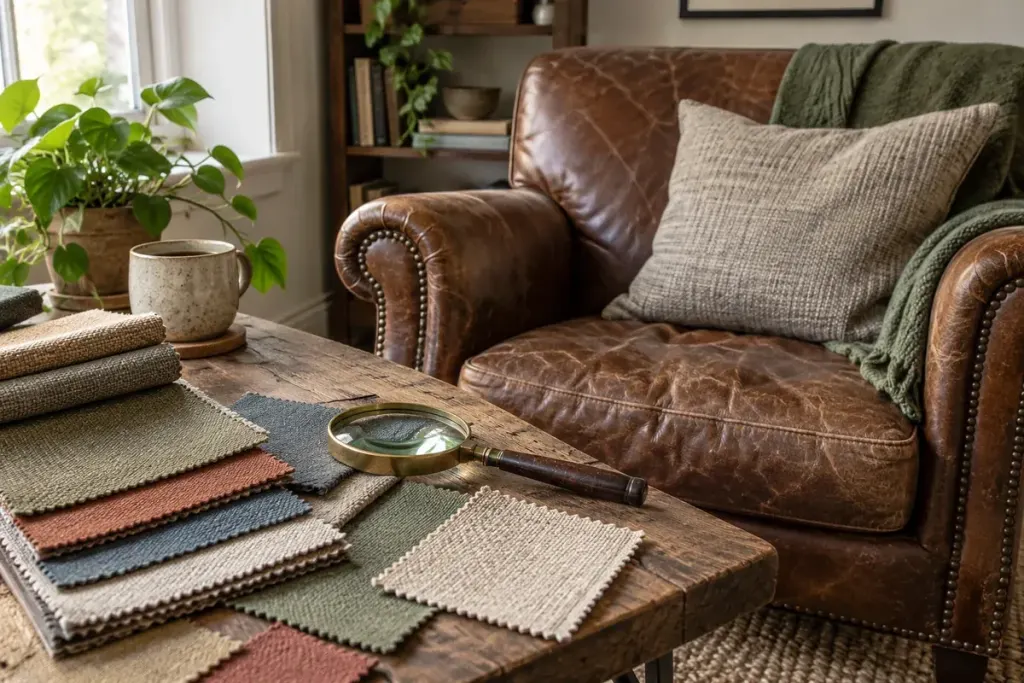
Two upholstery samples look equally appealing. One advertises twice the abrasion-test count, so it seems reasonable to expect twice the life. That conclusion goes further than the test result supports.
Abrasion testing measures performance under particular laboratory conditions. A sofa in daily use also encounters sunlight, spills, seam stress, cleaning and the habits of the people who sit on it.
Ask which test the number belongs to
Different methods use different movements and reporting conventions. A large number without the method, specification or context is difficult to compare. Ask the supplier what was tested and which use category the fabric is intended to serve.
The Association for Contract Textiles’ abrasion disclaimer explicitly cautions that twice the abrasion cycles does not mean twice the service life. Results above its high-traffic guideline have not been shown to indicate a longer fabric lifespan.
Look at the other ways a fabric can disappoint
Pilling, colour change, seam behaviour and cleaning compatibility can matter even when abrasion performance is strong. A fabric may remain physically intact while no longer looking or feeling as you hoped.
Describe the room honestly. Is the chair beside a sunny window? Will food regularly be eaten on it? Are pets part of the household? The answer should guide questions about suitability and care rather than produce a universal “best fabric.”
Check the complete furniture system
Padding, frame shape, seams and upholstery workmanship affect how the textile is stressed. A sample in your hand cannot show every issue that may appear when stretched over a particular arm or cushion.
Ask the upholsterer whether the selected fabric suits the furniture’s construction and whether pattern placement or pile direction creates additional considerations. Keep the product reference and care instructions with the furniture record.
Compare requirements before scores
Make a short shortlist using the needs of the room: appropriate durability category, manageable cleaning, acceptable texture and appearance in the actual light. Use test results to support that comparison, not to replace it.
If a seller promises a specific lifespan from a rub count alone, ask for the basis and any warranty terms in writing. A well-informed choice recognises what a laboratory result tells you—and leaves room for the many ordinary conditions that determine how upholstery ages at home.