
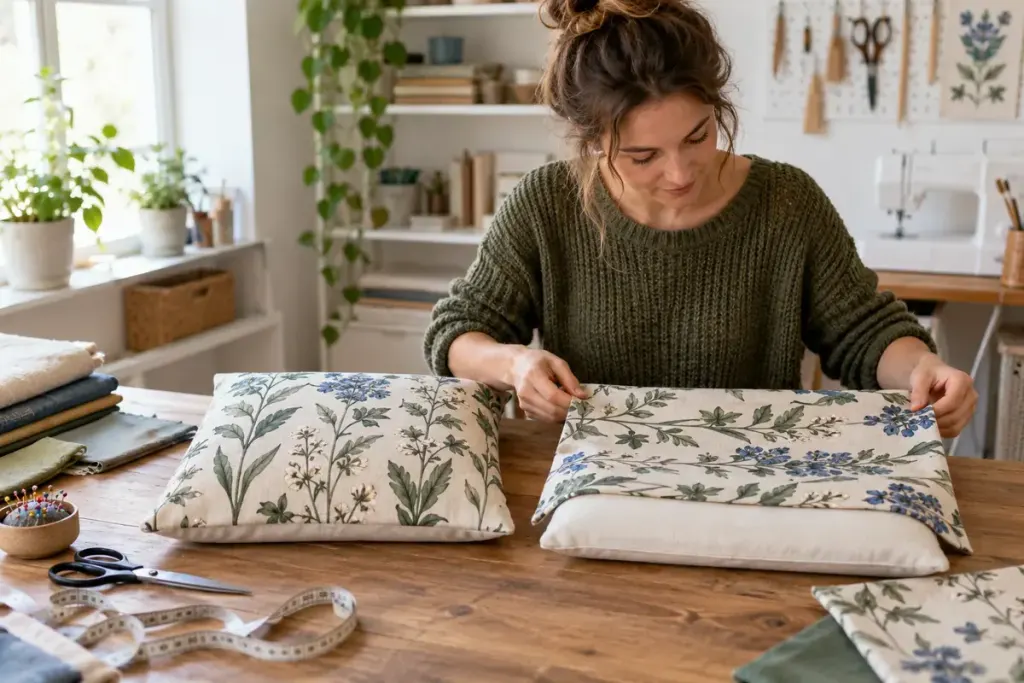
A large floral fabric can look balanced on the roll and awkward on a small cushion. The difference often comes from where the motif lands after cutting and sewing. Previewing the finished face helps you decide before the scissors commit the fabric.
Make a window for the visible area
Draw the intended finished cushion face on paper and cut out its centre to create a viewing frame. Move that frame over the fabric. Look at the design inside the window rather than the full repeat around it.
Mark the finished outline and the separate cutting allowance according to your pattern. A flower that sits neatly inside the cutting line may be partly lost in the seam. Keep those two boundaries distinct while planning.
Choose what should feel deliberate
You might centre one motif, place it off to one side or use an all-over section with no single focal point. None is automatically correct. Compare a few options at the scale of the actual cushion and in the orientation it will have on a chair or sofa.
Check directional prints carefully. Birds, lettering or stems may look upside down when the cover is turned. Fabric nap and grain also need attention; an attractive print position does not justify ignoring the construction requirements.
Plan the second piece before cutting the first
If making a pair, decide whether they should match, mirror one another or show different parts of the repeat. Lay out all pieces before cutting so an early choice does not leave too little fabric for the second cover.
For a reversible cushion, consider how both faces will look and where the closure sits. Photograph the planned layout for your own reference, then label pieces in a way that will not mark the visible fabric.
A paper window costs little and reveals a lot. It turns pattern placement from a surprise after sewing into a design decision you can compare calmly at the table.