
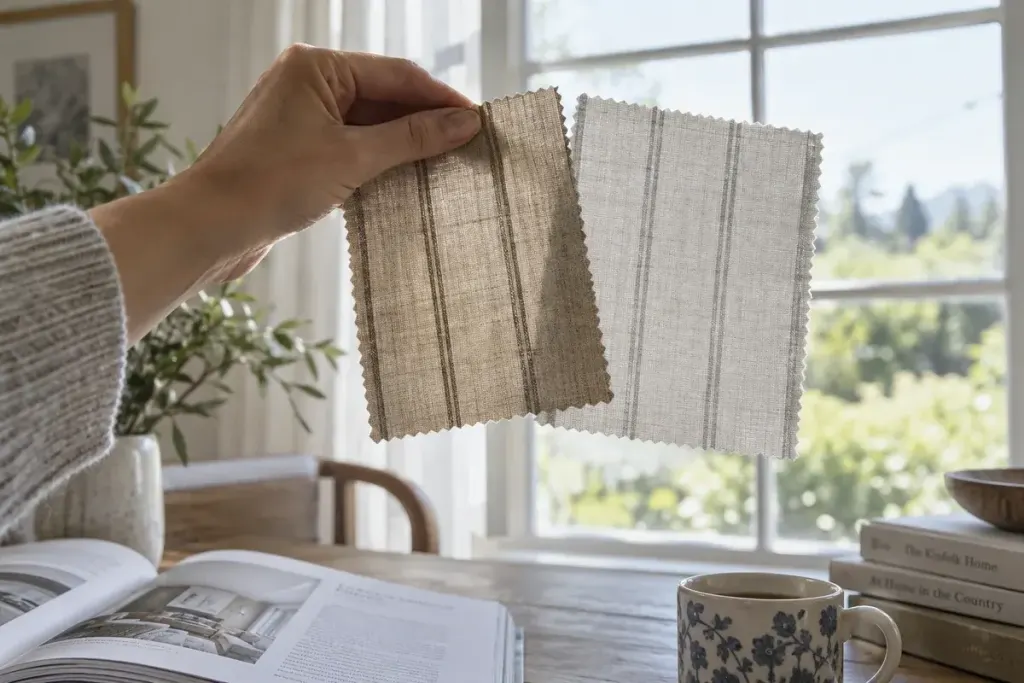
The face fabric gets most of the attention when curtains are chosen, but the lining can change how the finished curtain hangs and how the room feels. A sample that looks rich on a table may appear much lighter when daylight passes through it.
Begin with the room’s purpose. A bedroom, a street-facing sitting room and a decorative doorway do not necessarily need the same balance of light control, privacy and weight. Decide what the curtain must do before choosing the extra layer.
Test the fabric against the actual light
Hold the face fabric and proposed lining together at the window. Look at them in daylight and, where privacy matters, consider the effect of indoor lighting after dark. A small sample cannot reproduce every fold, but it can reveal a surprising change in colour or translucency.
John Lewis’s curtain buying guide describes different lining options, including blackout and thermal products. Product descriptions are a starting point; check the specifications of the exact fabric and construction being offered.
The edges still matter
A blackout lining does not automatically make the whole room completely dark. Light can enter around the top, sides and centre opening. Pole or track placement, curtain width and the way the panels meet all influence the result.
Likewise, do not assume that a “thermal” label promises a particular reduction in heating costs. Performance depends on the product, installation and room. Ask for evidence supporting any specific claim rather than treating the word as a measured guarantee.
- Compare light transmission at the window.
- Check the combined weight for the intended track or pole.
- Consider how the extra layer changes drape.
- Read the care instructions for the complete curtain.
Discuss cleaning before ordering. Face fabric and lining may behave differently, and an unsuitable washing method can leave the layers hanging unevenly. Keep the supplier’s care information with the order details.
If the curtain is being made to measure, explain the practical priority in plain language: darker mornings, daytime privacy or a fuller appearance. A good specification translates that need into fabric, lining and fitting choices. The lining is not merely hidden fabric; it is part of how the finished curtain works in the room.