
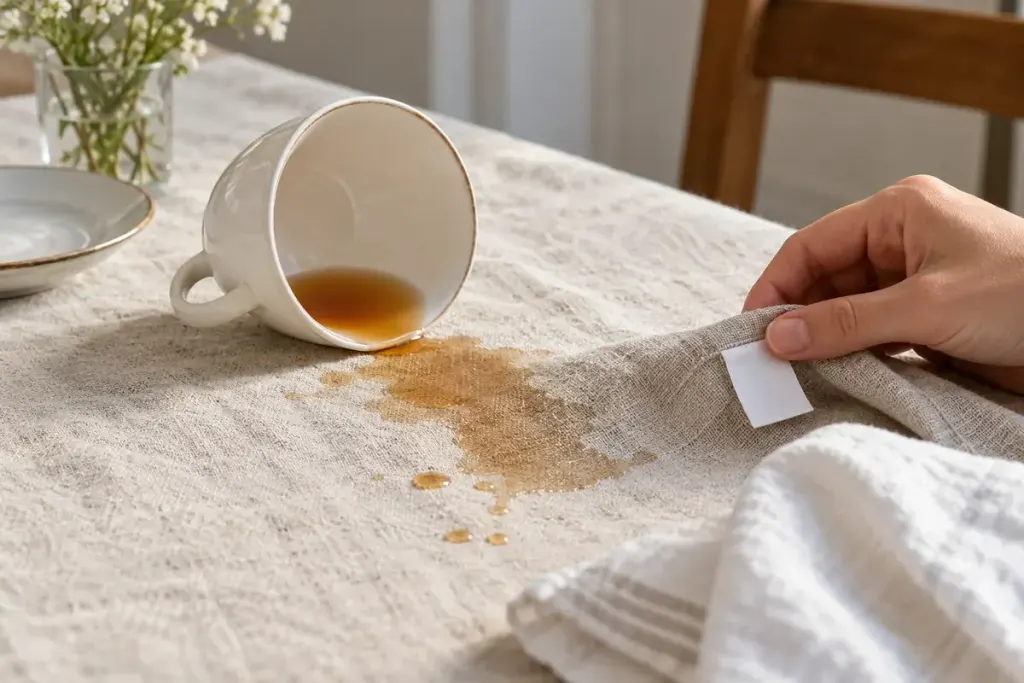
A cup tips over and the instinct is to grab the strongest cleaner under the sink. Pause long enough to identify the cloth. A washable cotton tablecloth, a coated fabric and a delicate decorative runner may need different treatment.
Read the care label before choosing a product
Check the fibre information and permitted washing, bleaching and drying methods. If the item has a special finish or a dry-clean-only instruction, follow the supplier’s advice. A remedy that worked on a white kitchen cloth may damage colour or coating on another textile.
For an ordinary spill, remove loose material carefully and blot as the item’s instructions allow, using a clean cloth rather than rubbing the stain across a larger area. Keep the spill’s identity in mind. Tea, grease and a coloured sauce are not one interchangeable problem.
Test without creating a second stain
If a treatment is permitted, test it on an inconspicuous area first and check for colour change or damage. Use the product’s stated dilution and contact time. Do not combine household cleaners or add extra products because the first attempt has not worked immediately.
Keep a note of what you used, especially if the cloth may go to a professional cleaner. That information is more helpful than arriving with a damp bundle that has already received several unidentified treatments.
After the appropriate wash, inspect the area before using heat where the care instructions allow drying or ironing. If a mark remains, seek fabric-specific advice rather than repeating increasingly harsh treatments. Some damage or discolouration cannot be removed without affecting the textile.
For table linen used often, keep the care label information accessible even if the original label becomes difficult to read. A photograph stored with the product name can save time during the next spill. Good care begins with recognising the material you want to preserve, not treating every mark as a contest with the strongest chemical available.