
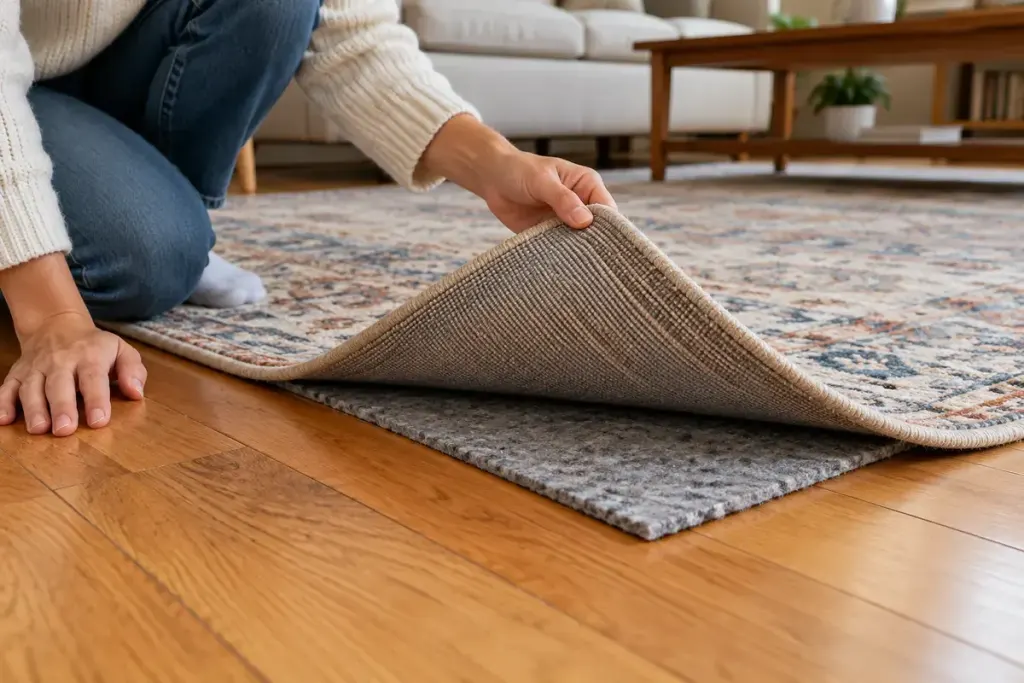
A rug underlay touches two different products: the rug above and the floor below. Choosing it only for softness can overlook the surface that will remain in contact with it for months.
Identify the flooring material, finish and any underfloor heating before buying. Keep the product name if available. “Wood-look floor” is not enough information to distinguish timber, laminate and vinyl with different care requirements.
Ask about the backing material
Check the floor manufacturer’s current guidance for compatible mats and underlays. For example, Karndean’s UK care guidance distinguishes backing materials and warns that some synthetic backings can cause discolouration. That advice concerns its products and should not be treated as a universal rule for every floor.
Ask the underlay supplier to confirm compatibility with your particular surface and heating arrangement. A generic “non-slip” label describes an aim, not proof that the material is suitable for every finish.
Consider the rug’s construction as well. The pad should support it without creating an obvious ridge or extending beyond the edge where someone can catch a foot. Follow the supplier’s sizing instructions.
Check the result in use
Lay the products on a clean, dry surface as instructed. Confirm that doors clear the rug and that the edges remain flat. If the rug moves or curls, address the problem rather than adding random layers underneath.
Lift the rug periodically for cleaning and inspection in line with the floor’s care guidance. Look for trapped grit, moisture, residue or a change in the surface. Stop using an incompatible product and ask the manufacturer about the appropriate next step.
Keep the underlay packaging or specification with your home-care records. When the rug moves to another room, check compatibility again. The same pad that works on one floor may be a poor choice on another, even when both rooms appear similar.