
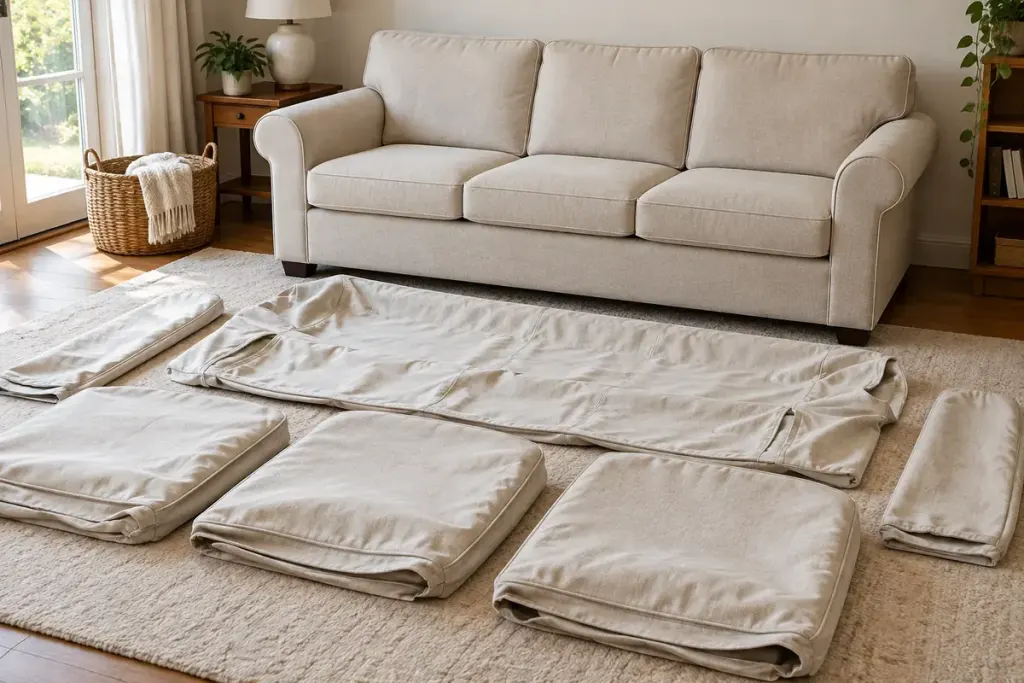
A sofa is two metres wide, and the replacement cover says it fits a two-metre sofa. That is not enough information to know whether the set will fit the arms, back cushions and separate seat sections.
Start with the furniture’s exact model and version where available. Similar-looking ranges can change construction between years, and a cover designed for one configuration may not suit another.
Count the pieces before measuring
- Frame or main body cover.
- Separate seat-cushion covers.
- Back-cushion covers, including any different shapes.
- Chaise, corner or arm sections.
- Any fastening strips or other model-specific components.
Photograph the sofa and the removable pieces before taking anything apart. Label temporary notes so left and right remain clear from the viewing direction used by the seller. A chaise description can be surprisingly easy to reverse.
Measure according to the supplier’s method. Overall sofa width is different from cushion width, depth and thickness. Include shape and closures, not only a list of numbers.
Check how the cover is intended to fit
A tailored replacement and a generic stretch cover solve different problems. The first relies on specific shapes and attachment points; the second may need tucking and can alter the appearance of seams and cushions. Look at the instructions and realistic photographs of the same configuration.
Confirm the care requirements and return conditions before ordering a custom product. A fabric sample can help assess texture and colour, but it cannot prove that the pattern pieces are correct.
When the set arrives, compare the contents with the order before washing or altering anything. Fit it gently according to the instructions rather than forcing a zip around an obviously mismatched cushion.
A complete piece list turns the purchase from a guess based on the sofa’s silhouette into a checkable match. That is especially useful when the original cover has been removed and several similar fabric pieces are lying on the floor.