
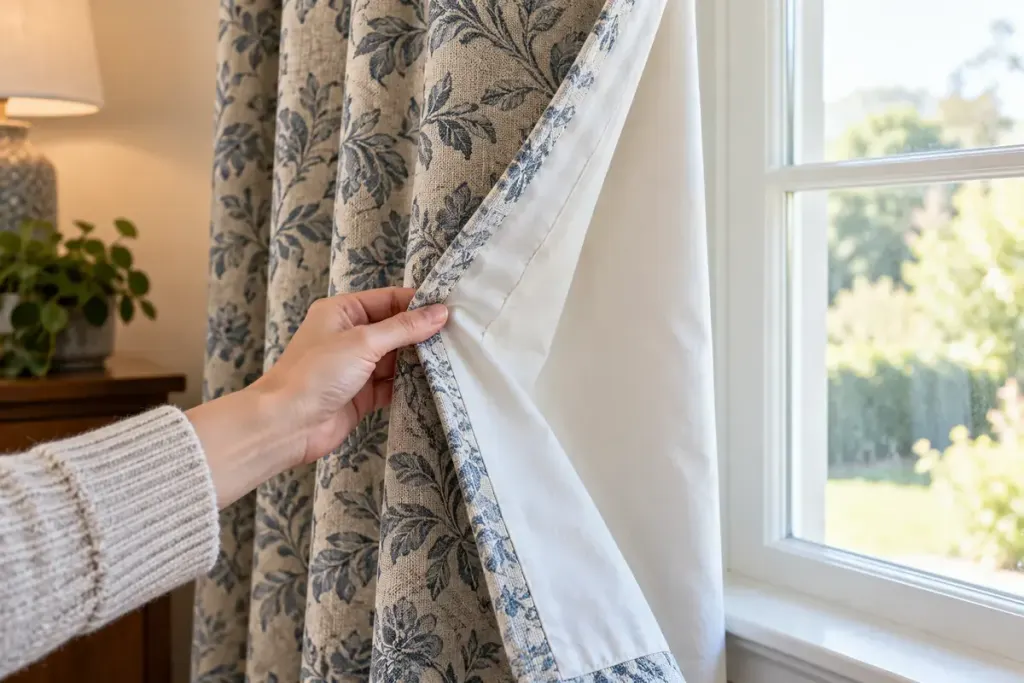
A fabric looks attractive on both sides, so you begin cutting without marking a face. When the panels are hung together, one reflects light differently or shows the pattern in reverse. The difference was present all along but became obvious only in the window.
Inspect in the light where it will hang
Unroll a sample and compare both sides in daylight and room lighting. Look at print clarity, weave, sheen and any coating or backing. Ask the supplier which side is intended to face the room and whether the fabric has a required direction.
Some fabrics are designed to be reversible; others are not. A pleasing reverse appearance does not establish that a coating, blackout layer or performance treatment should be exposed in that orientation. Follow the product information for the exact material.
Mark before pieces become anonymous
Once the face and direction are confirmed, use a suitable removable marking method on the relevant side of each piece. Test it on an offcut first. Keep the top direction consistent across matching panels, especially with directional patterns or a surface that changes appearance when reversed.
Lay the pieces beside each other before sewing. Check that the chosen faces, pattern direction and intended hems agree. It is easier to rotate an unsewn piece than to discover the mismatch after lining and heading tape have been attached.
Treat lining as a separate material
A lining can have its own face, backing and care instructions. Confirm how it should be assembled with the main fabric rather than assuming every smooth side faces the same direction. If special performance requirements apply, obtain the supplier’s construction guidance.
Keep labelled offcuts with the order details for future repairs. A curtain is seen under changing light and from more than one angle. A few minutes identifying the layers before cutting can prevent a subtle material difference from becoming a very visible finished mistake.