
A cushion can look inviting from the front and feel uncomfortable when someone leans against a hard button on the back. The closure deserves a place in the design before the decorative details are finished.
Think about use first. A cushion on a rarely used chair has different demands from one moved around a family sofa every day. Frequent washing also changes the importance of an opening that makes the insert easy to remove.
Compare the closure with the insert
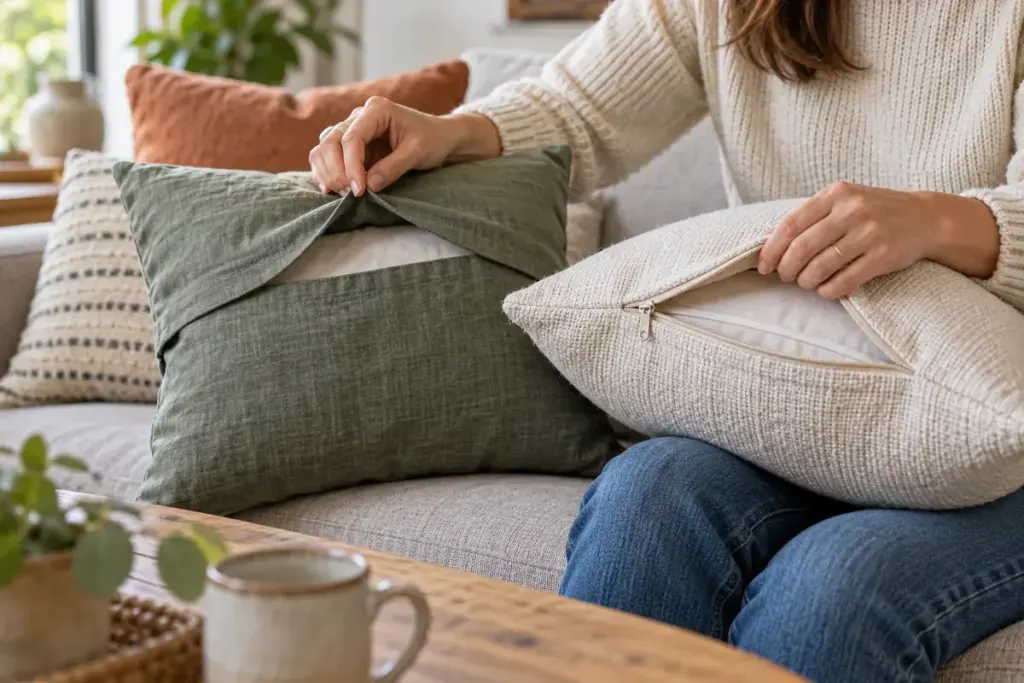
An envelope opening avoids a zip but needs enough overlap to remain closed around the chosen insert. If the cover is tightly filled, a shallow overlap may gape. Make a sample or test the layout with the actual insert before cutting expensive fabric.
A zip can provide a neat opening, but its position and finish affect comfort. Consider whether the pull sits where someone will lean and whether it can be covered appropriately. Follow the sewing method suited to the fabric and zip type.
Buttons, ties and other fastenings can be decorative, yet they add texture and sometimes hard points. Consider the people using the cushion and whether small detachable parts are appropriate in that setting.
- Check that the insert passes through the opening without excessive force.
- Choose a closure compatible with the care instructions.
- Keep bulky seams away from the main leaning area where possible.
- Test the closed cover while sitting against it.
After the first wash, inspect the closure again. Fabric shrinkage or movement can change the overlap and fit. Prewashing suitable fabric according to its care requirements can help reveal some of those changes before construction.
The finished cushion should work from every side. A closure that opens easily for care and stays unobtrusive during use often contributes more to everyday comfort than an extra decorative trim.