
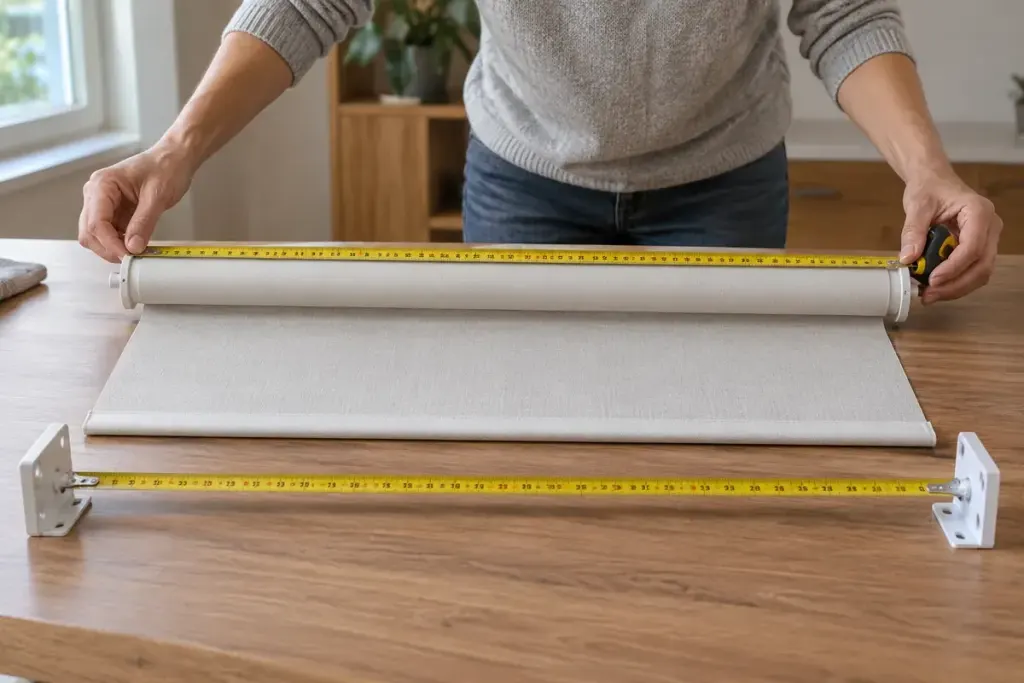
A roller blind ordered at the width of a window opening may arrive with fabric narrower than expected. The measurement on the order can refer to the complete mechanism, while the cloth sits between brackets and fittings.
Before measuring, read the supplier’s definitions. “Blind width,” “fabric width” and “recess width” are not automatically the same measurement, and made-to-measure ordering rules differ between products.
Choose the mounting position first
Decide whether the blind will sit inside the recess or overlap it from outside. Check handles, opening sections and other obstructions that could interfere with the roller or fabric. A measurement taken without considering the mounting position may answer the wrong question.
Use the supplier’s instructions for where to measure, which dimension to submit and whether they make a manufacturing deduction. Do not subtract an allowance yourself if the supplier will subtract it again. Ask for clarification before placing a custom order.
Separate coverage from the mechanism
Confirm the expected fabric width and the overall bracket-to-bracket dimension for the chosen model. If reducing light gaps is important, ask how the design handles the sides. A blackout fabric does not by itself guarantee a completely dark room when light can enter around its edges.
Record measurements with units and label each window. For several similar openings, measure each one rather than assuming they match. Have a second person read back the order details before submitting them.
Installation also needs suitable fixings and compliance with the product’s child-safety instructions, including any cord or chain safety device. Use a competent installer when the surface, access or fixing method is uncertain.
Keep the confirmation and measurement notes together. If the finished blind does not fit, those records help distinguish a measuring error, an ordering misunderstanding and a manufacturing issue. The small step that prevents most confusion is agreeing exactly which width the supplier is asking you to provide.