
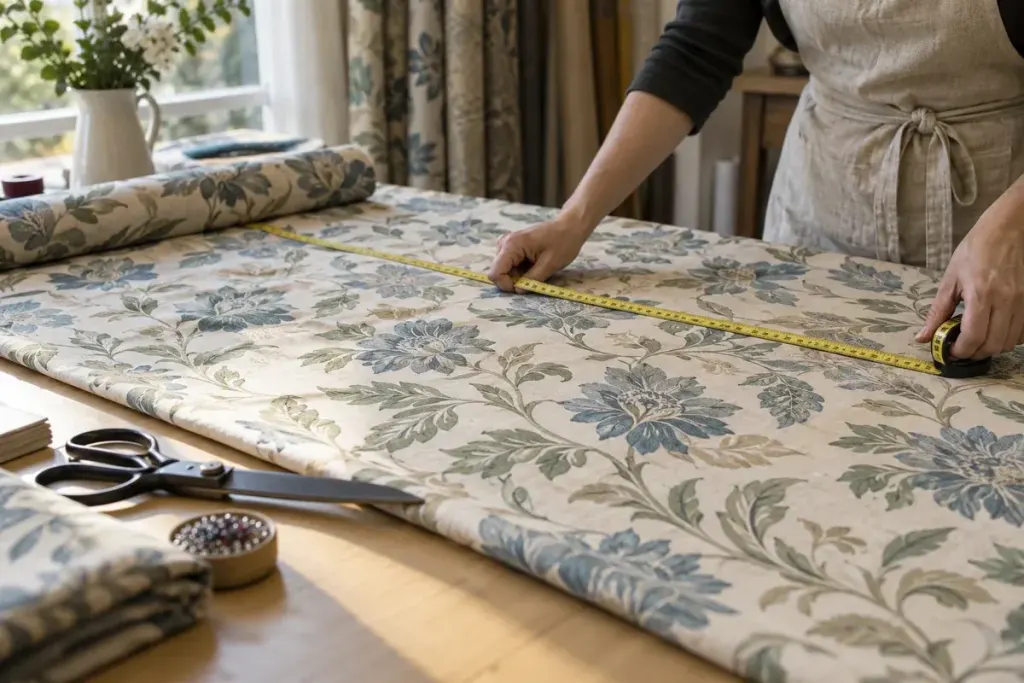
The window measurements are correct, yet the patterned fabric order is too short. The missing allowance may be the repeat: the distance before the same part of the design appears again.
Separate drop length from cutting length
The finished curtain drop is not the whole cutting requirement. The heading, hem and construction need allowances, and matching a pattern can require each cut length to extend to a suitable point in the repeat. Check the fabric specification and intended making method before calculating.
In a simplified straight-match example, suppose the required construction length is 250 cm and the vertical repeat is 40 cm. Rounding the cut to the next complete repeat gives 280 cm. Four such drops would require 11.2 metres before any additional allowance needed for initial positioning, defects or the maker’s method. This is an illustration, not a universal ordering formula.
Ask how the pattern matches
A half-drop or another offset arrangement needs different planning from a straight match. Fabric width, usable width, seam placement and directional motifs also matter. A large flower centred on one curtain may look awkward if its partner begins at a different point.
Sketch the drops and mark where a recognisable motif should sit. Confirm the calculation with the supplier or curtain maker before ordering, especially for expensive fabric or a complex heading. Ask whether all lengths can come from the same batch.
Keep the specification, repeat measurement and intended orientation with the order. Do not cut every drop solely by measuring from the previous raw edge; verify the pattern position as well.
The extra fabric is not necessarily waste caused by poor measuring. It can be the material required to make separate panels read as one deliberate design when the curtains are closed.