
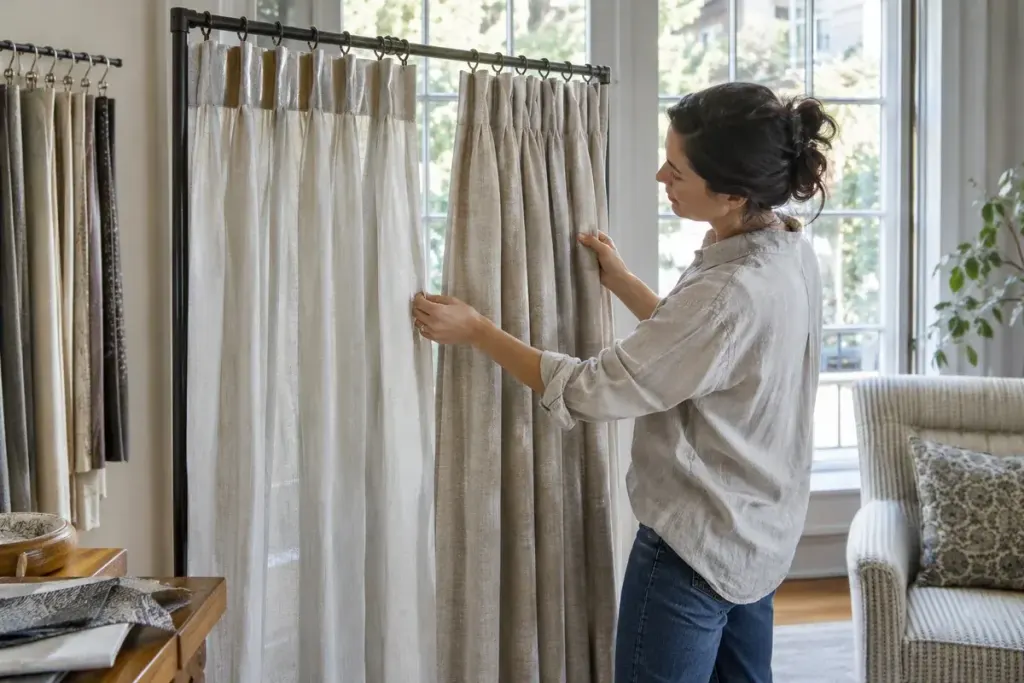
Two windows use the same fabric colour, yet one looks softly layered and the other looks like a flat sheet. The difference may be fullness: how much fabric is gathered across the width it needs to cover.
Before choosing another colour sample, check the measurements and heading style. They influence how the fabric hangs both open and closed.
Measure the system, not just the glass
Use the installed or planned rail or pole dimensions according to the curtain supplier’s instructions. Consider where the panels should finish and how much space they occupy when drawn back. Window width alone may not describe the area the curtains need to cover.
IKEA’s measuring guide distinguishes the supporting hardware, drop and desired pleated effect. Follow the instructions for the particular heading and product rather than treating every curtain as the same construction.
Understand what the fullness ratio means
In a simplified example, a two-times fullness calculation for a 200 cm span uses 400 cm of flat fabric width before relevant construction allowances. This is an illustration of the ratio, not a universal cutting instruction.
Some ready-made dimensions refer to an individual panel, others to a pair or a finished heading. Confirm exactly what is being sold. A mistaken assumption here can leave you with half the intended coverage.
Compare fullness with fabric weight
A sheer fabric and a heavy lined curtain can occupy very different amounts of space. More fabric may create a richer gathered appearance, but it can also increase bulk at the sides. Check that the hardware is appropriate for the finished weight.
Ask for a hanging sample where possible. A flat swatch helps with colour and texture but does not show how the heading, lining and folds interact. View it in the room’s daylight and evening lighting before committing to a large order.
Write a complete order note
Record rail width, required drop, heading, panel count, lining and the supplier’s confirmed measurement convention. Include obstructions such as radiators or furniture, and follow relevant safety guidance for the installation.
Have uncertain measurements checked before cutting or ordering custom work. The best result comes from matching fabric, gathering and hardware to the room’s use. Colour remains an enjoyable decision, but it makes much more sense once you know the shape the textile will actually take.